
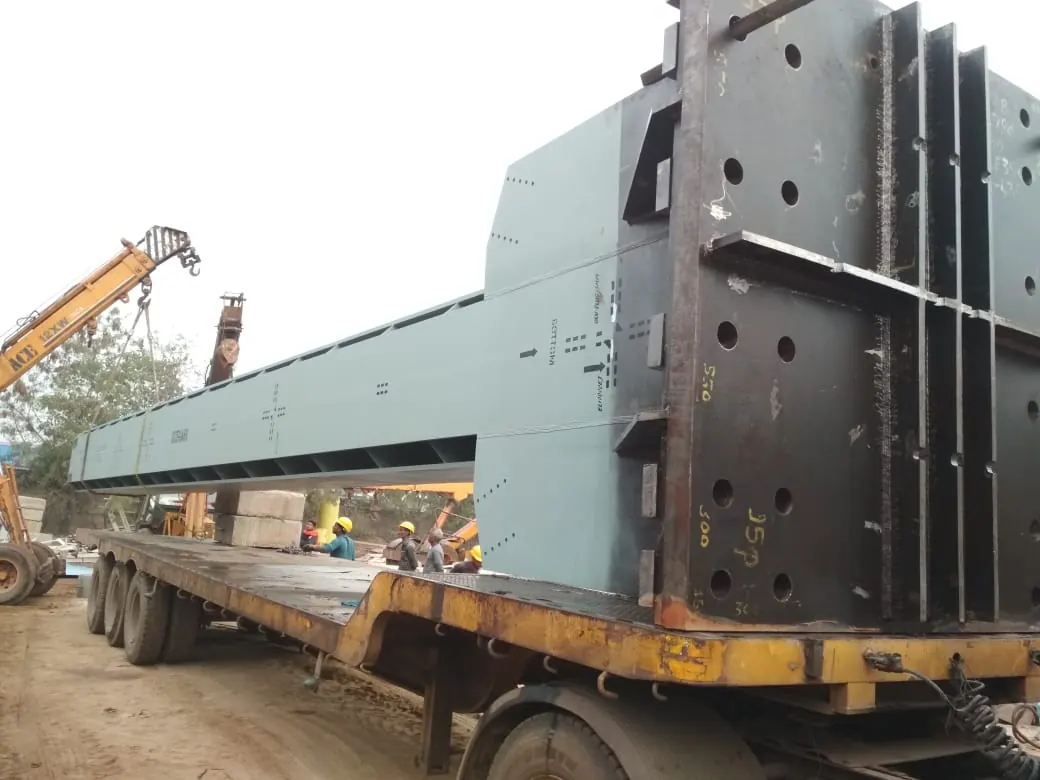
Steel fabrication tonnage can describe several different quantities. A drawing schedule, a weighbridge ticket and an invoice may each be correct for their own purpose while showing different totals. Reconciliation starts by establishing which quantity the contract uses for payment and what the agreed scope includes.
Agree the commercial measurement basis
Read the purchase order, bill of quantities, drawings and measurement clauses together. Identify the revision used for the original price and the unit of measurement. Ask whether the payable quantity comes from a theoretical calculation, actual weighing or another stated method. Check how the contract treats rounding, deductions and supporting records.
Define the boundary of the package. Are connection plates, stiffeners, cleats, studs, bolts, weld metal, temporary attachments, coating and packing included in the steel quantity, separately priced or excluded? How are holes, cuts and openings treated? The answers depend on the contract. A tonne figure without these rules is difficult to compare with another quotation.
Separate the quantities
Net finished quantity describes the steel in the finished members within the stated boundary. Its calculation needs an agreed treatment of openings, fittings and other details.
Theoretical quantity is calculated from dimensions and assumed or published unit masses. It may be based on nominal dimensions and a defined deduction rule. Keep the formula and source dimensions visible so someone else can reproduce the total.
Actual weight is obtained by weighing a defined load. A ticket can include items outside the payable steel scope, such as packing or transport supports, and the load must be matched to the member list. Use a weighbridge total for payment when the contract specifies actual weight.
Net describes the scope of the finished steel. Theoretical and actual describe ways to measure that scope. Track purchased material and cutting scrap separately for procurement and yield. Include them in the payable quantity only where the contract provides for them.
Work through a hypothetical example
Suppose an agreed theoretical schedule contains four beams at 2.00 tonnes each and connection plates totaling 0.40 tonnes. The baseline is 8.40 tonnes. An approved drawing change adds four stiffeners at 0.05 tonnes each, or 0.20 tonnes. A separate approved change removes a 0.10-tonne bracket. The revised theoretical quantity is 8.40 + 0.20 − 0.10 = 8.50 tonnes.
Now suppose the loaded truck weighs 20.62 tonnes and its recorded tare is 12.00 tonnes. The payload weighs 8.62 tonnes. Subtracting 0.12 tonnes of packing and transport supports leaves 8.50 tonnes of steel. Here the calculation and the weighing agree. Use the packing list to confirm that each member is present and the agreed measurement rule to determine payment.
Build a traceable reconciliation
- List member marks, quantities, dimensions, unit masses and drawing revisions in a baseline schedule.
- Identify each addition, omission and revision against an approved change or instruction. Record its quantity and commercial status.
- Check that each member appears once and that plates and fittings follow the agreed inclusion rules.
- Compare dispatch lists and weighing records to the same scope. Show packing and temporary items separately.
- Present the baseline, approved changes, revised total and outstanding differences with the evidence for each line.
An unresolved change can be shown separately from an approved variation. Give the reviewer the drawing, instruction, calculation and approval reference so the difference can be assessed without reconstructing the whole job.
When requesting a quotation, include the member schedule, drawings and proposed measurement rules. See the steel fabrication RFQ checklist or share the package details.
- fabrication tonnage
- steel quantity
- measurement
- variations
About Kothari Chemicals (Engineering Division)
The Kothari Chemicals (Engineering Division) at Kothari Chemicals (Engineering Division) writes from day-to-day work in steel fabrication, quality assurance and project execution at the Bhilai works.